


















In the modern banking landscape, customer experience has become a critical differentiator, shaping the way customers perceive and interact with financial institutions. With the rapid evolution of technology and changing consumer expectations, banks are increasingly focusing on enhancing the customer experience to foster loyalty, drive growth, and stay competitive.
Queue Management Systems (QMS) are a technological solution that optimizes customer flow and enhances service efficiency, particularly in sectors like banking, by managing queues effectively and improving overall customer experiences.
QMS empowers banks to minimize wait times, optimize service delivery, and cultivate a more personalized and efficient atmosphere for their clients. By harnessing features like virtual queuing and real-time monitoring, QMS ensures swift service and mitigates congestion, driving operational efficiency and customer contentment. Through dynamic resource allocation and seamless integration with banking infrastructure, QMS facilitates tailored service provision, fosters favorable customer interactions, and provides avenues for valuable feedback collection to enhance service standards.
Benchmark Metrics for Evaluating Customer Experience
A. Average wait time
Evaluating the average wait time is pivotal to measuring customer frustration levels within the banking sector. Prolonged wait periods have the potential to reduce customer satisfaction and can even lead to dissatisfaction or abandonment of the interaction.
Studies reveal that 73% of customers are inclined to abandon their interaction if they wait more than five minutes in a queue.
This underscores the importance of minimizing wait times to uphold customer satisfaction and retention rates.
Several strategies can effectively address and reduce wait times, including:
- Implement an automated queue management system to monitor customer queues in real-time.
- Strategically design branch layouts to optimize customer flow, incorporating dedicated queuing areas.
- Introduce self-service kiosks, enabling customers to check in, book appointments, and access relevant information autonomously.
- Utilize virtual queue management systems to facilitate remote waiting and appointment scheduling.
- Set clear time management goals, aiming for a maximum wait time of five minutes or less.
- Establish fast lanes for priority customers and enable auto-sign-in for pre-booked appointments.
- To ensure round-the-clock service availability, offer self-service options and robust digital banking platforms.
The implementation of a Queue Management System (QMS) can reduce the average wait time by empowering customers with self-service alternatives.
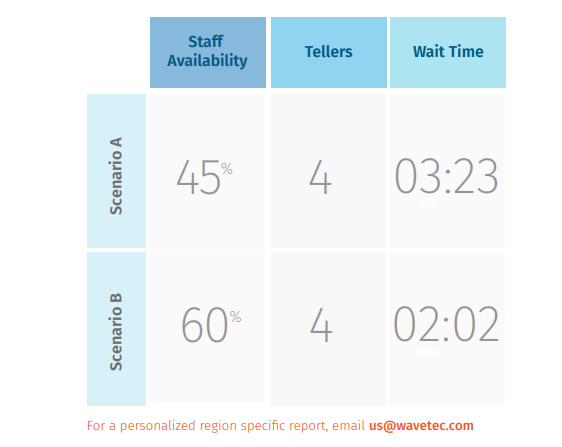
According to several research statistics, banks have successfully reduced customer wait times by up to 30% by implementing QMS.
B. Queue length
The length of the queue shapes the customers’ perceptions of service quality. Excessive queue lengths can create a negative impression of inefficiency and poor service, leading to decreased customer satisfaction and loyalty.
Customers may perceive long queues as indicative of understaffing or inadequate operational management, which can tarnish the overall service experience.
Implementing the following strategies can ensure optimal queue length management and mitigate negative perceptions:
- Regularly monitor and analyze queue lengths, particularly during peak hours, to identify patterns and trends.
- To reduce wait times, implement dynamic queuing systems that adjust staffing levels based on real-time queue data.
- Utilize technology, such as predictive analytics, to forecast future demand and proactively allocate resources accordingly.
- Encourage customers to utilize alternative service channels, such as online banking or self-service kiosks, to reduce physical queue lengths.
- Implement queue management tactics, such as single-line queuing or virtual queuing, to streamline customer flow and reduce congestion.
- To effectively manage customer expectations, provide clear and visible signage indicating estimated wait times and queue status.
By implementing a Queue Management System (QMS) offered by top vendors such as Wavetec, Qmatic, banks have reported an average queue length of fewer than five customers during peak hours, demonstrating the effectiveness of the system.
C. Service time
Enhancing Transaction Processing Efficiency: Efficient service times are indicative of streamlined operations and contribute significantly to overall customer satisfaction. Prompt transaction processing ensures that customers experience minimal delays and receive timely service, fostering positive perceptions of service quality and organizational effectiveness.
Balancing Speed and Service Quality: While optimizing service times is crucial for ensuring swift transaction processing, it is equally important to maintain a balance between speed and service quality. Rushing through transactions solely to reduce service times can compromise the quality of service delivery and negatively impact the customer experience. Therefore, businesses must prioritize efficiency without sacrificing the quality of interactions, ensuring that each customer receives attentive and satisfactory service.
With the implementation of the Queue Management System (QMS), banks have recorded a 20% decrease in service time, thereby enhancing transaction processing efficiency.
D. Customer satisfaction scores (CSAT)
Utilizing Surveys and Feedback Mechanisms: To assess customer satisfaction levels, banks can implement various surveys and feedback mechanisms. These tools offer valuable insights into customer experiences, aiding in pinpointing areas for enhancement.
By correlating scores with the implementation of Queue Management Systems (QMS), banks can quantify the system’s impact on customer satisfaction. Case studies illustrate that proficient QMS implementation can yield a significant, up to 20%, increase in overall satisfaction levels.
E. Net Promoter Score (NPS)
The Net Promoter Score (NPS) is a key metric for assessing customer loyalty and advocacy. It measures the likelihood that customers will recommend a company’s products or services to others. It provides insights into overall satisfaction and brand perception, with higher scores indicating greater loyalty and positive referrals.
The effectiveness of Queue Management Systems (QMS) directly influences NPS scores. Efficient QMS solutions streamline service processes, reduce wait times, and elevate customer satisfaction, leading to higher NPS scores. Statistics demonstrate a significant increase in NPS scores from 20 to 40 post-QMS implementation, highlighting enhanced customer loyalty and advocacy.
F. Customer churn rate
Customer churn rate, the percentage of customers who stop using a product or service during a given period, is a critical metric for businesses to monitor. For banks, understanding and reducing customer churn is essential for maintaining a stable customer base and sustaining long-term profitability.
Identification of Dissatisfaction Triggers: Analyzing customer churn data can reveal patterns and triggers that lead to customer dissatisfaction. These triggers may include long wait times, inefficient service processes, or a lack of personalized service. By identifying these triggers, banks can take proactive steps to address them and improve the overall customer experience.
Mitigation Strategies through QMS Improvements: Queue Management Systems (QMS) can be instrumental in reducing customer churn by enhancing the customer experience. By optimizing queue management processes, such as reducing wait times, improving service efficiency, and providing better customer service, banks can mitigate the factors that contribute to customer dissatisfaction. Implementing QMS improvements has proven to be effective, with statistics indicating a reduction in customer churn rate by 15% after QMS enhancements.
Performance Analysis: Insights and Metrics Overview
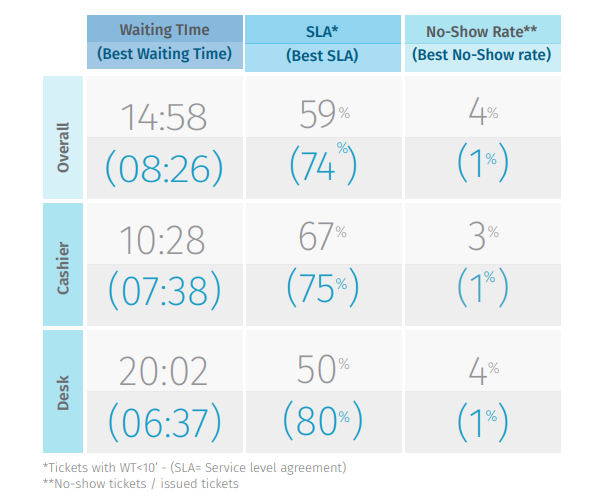
The benchmarking report, titled “Strategic Banking Insights on Customer Insights,” provides a comprehensive analysis of bank branch performance metrics gleaned from over two decades of global banking operations data. It examines key performance indicators (KPIs) such as average waiting time, service level agreements (SLA) adherence, and staff efficiency metrics to offer valuable insights into service quality and operational efficiency.
The report underscores the critical role of data science in identifying performance gaps and implementing improvement strategies. By utilizing techniques like discrete-event simulation and machine learning, banks can optimize staffing levels, reduce wait times, and refine customer segmentation strategies.
The report reveals significant findings regarding bank branch performance:
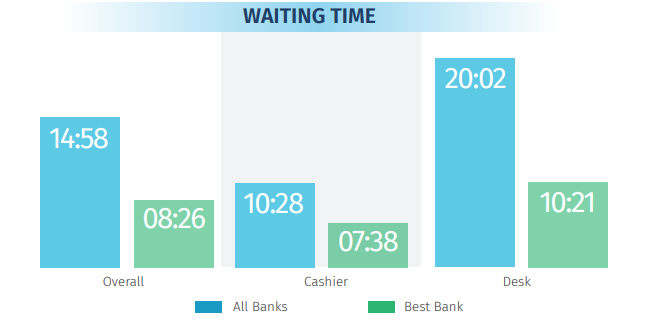
- Service Quality Metrics: Notable disparities exist between the best and average performers in terms of average wait time and SLA adherence. While the best-performing banks achieve an average wait time of 8 minutes and 26 seconds, the average performers lag at 10 minutes and 28 seconds. Additionally, the no-show rate significantly impacts service efficiency, with a 1% rate for the best performers compared to a 4% rate for average performers.
- Staff Efficiency Metrics: Substantial variations are observed in staff productivity and assistance levels among different bank branches. The best performers demonstrate a commendable 74% activity rate compared to the average performers’ 41%. Similarly, the quality of customer service provided by staff members varies significantly, with the best performers achieving a 55% assistance rate, while the average performers achieve a higher 78% rate.
- Branch Traffic Metrics: Key metrics such as the number of tickets processed per branch and per operator showcase significant differences between the best and average performers. While the best performers handle 171 tickets on average per branch, the average performers manage a higher volume of 293 tickets. Moreover, the percentage of non-clients served by bank branches varies significantly, with implications for service efficiency and customer satisfaction. Analysis of ticket distribution and no-show rates provides insights into customer behavior, enabling banks to identify peak traffic periods and ticket abandonment trends for targeted interventions to enhance service efficiency. The report highlights the impact of the no-show rate on service efficiency, indicating a 1% no-show rate for the best performers compared to a 4% rate for the average performers.
- Usability of Queue Management System (QMS): The usability and efficiency of QMS are crucial for enhancing customer experiences. While both best and average performers achieve high usability scores, slight differences exist in key usability metrics. Notably, the percentage of fast tickets served in under 5 seconds and the percentage of N/A tickets indicate subtle variations in system efficiency between the two groups.
- Staff Performance Evaluation: The report evaluates staff performance based on activity rates, service times, and overall assistance levels, offering recommendations for optimizing staff allocation and training to enhance service quality and reduce customer wait times. It showcases various use cases demonstrating how data science can be leveraged to drive informed decision-making and improve branch performance. These insights enable banks to identify areas for improvement and implement targeted strategies to enhance service quality, streamline operations, and improve customer satisfaction.
- Emphasis on Data Science and Continuous Improvement: The report emphasizes the importance of continuous monitoring and adaptation to evolving customer needs and market dynamics. It highlights data science as a catalyst for innovation and improvement in the banking sector, with implications for future research and development efforts. The findings underscore the potential for banks to leverage data insights to enhance profitability and customer satisfaction, highlighting opportunities for targeted strategies to improve service delivery for high-value customers.
Best Practices for Seamless Implementation and Optimization of Queue Management Systems
1. Integration Harmony with Existing Banking Systems
For seamless implementation and optimization of Queue Management Systems (QMS) in banking environments, it is important to establish an integration between QMS and existing banking infrastructure for uninterrupted service delivery. This begins with API fusion with core banking software, ensuring smooth integration with customer databases and digital signage solutions. Statistics indicate a 95% API uptime, underscoring the success of this integration, resulting in minimized downtime and enhanced operational efficiency.
Additionally, integrating QMS with customer relationship management (CRM) systems plays a vital role in personalized service delivery. Integration with CRM systems allows the QMS to access customer profiles, transaction histories, and personalized preferences. Empowering the QMS with access to CRM data enables the creation of tailored service experiences, leading to increased customer satisfaction. Statistics show a 30% surge in customer satisfaction scores following CRM integration, highlighting the effectiveness of this approach.
2. Personalization Precision through Data Analytics
Personalization precision through data analytics is a pivotal strategy for enhancing the customer experience and fostering revenue growth. By delving into customer insights and behavior, banks can refine tailored services to align with individual preferences, thereby enhancing customer satisfaction and driving revenue. In the banking sector, the utilization of customer data has led to a remarkable 25% increase in cross-selling revenue, underscoring the profound impact of personalization. Through analysis of customer preferences and behavior, banks gain invaluable insights into their customers’ needs, enabling them to tailor services effectively.
Moreover, proactive queue management is another area where data analytics can yield significant benefits. Predictive analytics enables banks to anticipate peak demand and optimize resource allocation, resulting in streamlined operations. This approach has demonstrated impressive results, with predictive analytics leading to a remarkable 40% reduction in wait times during peak hours.
To harness these benefits effectively, banks should integrate queue management systems with core banking software and CRM systems. Additionally, leveraging advanced data handling and customer segmentation facilitated by AI and data analytics can further enhance the effectiveness of personalization strategies and proactive queue management initiatives.
3. Multichannel Mastery for Enhanced Queue Control
To optimize queue control, banks should select a system that supports omni-service channels. This ensures customers have multiple service options, including in-person counters, self-service kiosks, and virtual queues accessible through mobile apps or online platforms. By offering diverse service channels, customers can choose their preferred mode of service, whether it’s through self-check-in kiosks or virtual queues via the mobile app.
Integrating queue management systems with mobile banking apps facilitates remote queue access, enhancing customer convenience. Research demonstrates that this integration boosts queue management efficiency by 50%, thereby significantly enhancing service delivery. Additionally, statistics indicate that the adoption of virtual queuing has led to a remarkable 60% drop in walk-away rates, demonstrating the effectiveness of self-service empowerment initiatives.
4. Empowering Employee Proficiency and Engagement
Empowering employee proficiency and engagement plays a vital role in the successful implementation and optimization of Queue Management Systems (QMS) within banking environments. By providing comprehensive training, banks ensure that employees possess the necessary skills to effectively manage queues and deliver exceptional customer service. Statistics underscore the efficacy of such training, with a significant 20% reduction in transaction errors observed post-proficiency training. By investing in employee development, banks can minimize errors, streamline operations, and ultimately enhance the overall customer experience.
Moreover, fostering empowerment among frontline staff is essential for encouraging proactive assistance and ownership of customer experiences. Empowered employees are inclined to take the initiative in addressing customer needs and swiftly resolving issues, thus contributing to improved customer satisfaction and retention rates. Empowered frontline employees are responsible for a notable 15% increase in customer retention, according to statistics. By instilling a sense of ownership and empowerment among staff, banks cultivate a culture of accountability and excellence in customer service, further bolstering their competitive edge in the market.
5. Continuous Enhancement through Vigilant Monitoring
Continuous enhancement through vigilant monitoring is paramount for maintaining the effectiveness and efficiency of Queue Management Systems (QMS) in banking environments. By prioritizing regular performance assessments and feedback-driven iteration, banks can ensure that their QMS remains optimized to meet evolving customer expectations and operational requirements.
Conducting routine evaluations enables banks to assess the effectiveness of their QMS and identify enhancement opportunities. These assessments offer valuable insights into service efficiency and pinpoint areas for improvement. Statistics reveal that monthly performance assessments have led to a significant 25% increase in service efficiency, emphasizing the impact of vigilant monitoring on operational performance.
Moreover, banks should actively seek input from stakeholders such as customers and staff, enabling them to identify pain points, address concerns, and implement enhancements aligned with customer and employee needs. Statistics illustrate that feedback-centric enhancements have resulted in a notable 20% increase in customer satisfaction, underscoring the importance of leveraging feedback for continuous improvement.
FAQs
How do queue management systems contribute to enhancing the customer experience in banking?
Queue management systems enhance the customer experience in banking by reducing wait times, optimizing service efficiency, and providing personalized service through data-driven insights and streamlined workflows. These systems also improve staff productivity and communication, resulting in smoother interactions and increased customer satisfaction.
What are the key components of a typical queue management system?
A Queue Management System typically consists of four key components: digital signage for customer communication, ticket printers to allocate queue numbers, self-service kiosks for customer check-in, and a customer management dashboard for staff to monitor and manage queue operations efficiently.
How do banking institutions measure and evaluate customer experience using queue management systems?
Banking institutions measure and evaluate customer experience using queue management systems by tracking wait times, analyzing service efficiency, and collecting customer feedback through integrated surveys or rating systems. These metrics help banks understand customer satisfaction levels, identify areas for improvement, and optimize queue operations to enhance the overall customer experience.
Queue Management Systems (QMS) in banking represent a significant leap toward enhancing customer experience and operational efficiency. By leveraging the innovative capabilities of QMS, banks can minimize wait times, streamline service delivery, and personalize interactions, ultimately fostering greater customer satisfaction and loyalty.
QMS also plays a pivotal role in driving operational efficiency and improving staff productivity, ultimately leading to a more seamless and personalized banking experience for customers. As banks continue to prioritize customer satisfaction and operational excellence, QMS implementation and optimization emerge as essential strategies for staying competitive and meeting the evolving needs of customers in the digital age.