


















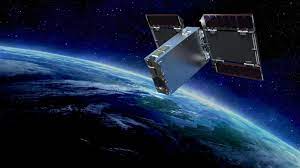

There are a lot of brand-new in-space power technologies emerging right now. A Japanese company has recently achieved a major milestone, demonstrating the astounding level of innovation involved in moving objects around in space. An in-orbit water-based propulsion system developed by Pale Blue, whose name I thought was a reference to a well-known Carl Sagan book, recently underwent a successful test, giving satellite designers yet another reliable, affordable propulsion option.
The idea of using water to propel around in space might seem fairly straightforward. Water jets for satellite propulsion systems haven’t yet been widely used, despite their simplicity and cheap cost. This initial Pale Blue system was the first time the company successfully tested its system in space. It was launched alongside Sony’s EYE satellite as part of its STAR SPHERE programme to capture pictures of the Earth.
The resistojet device has some novel characteristics, such as holding the water at a relatively low pressure and permitting it to vaporise at a relatively low temperature. There was clearly a lot of consideration put into the design, and the mission’s success serves as proof of that.