










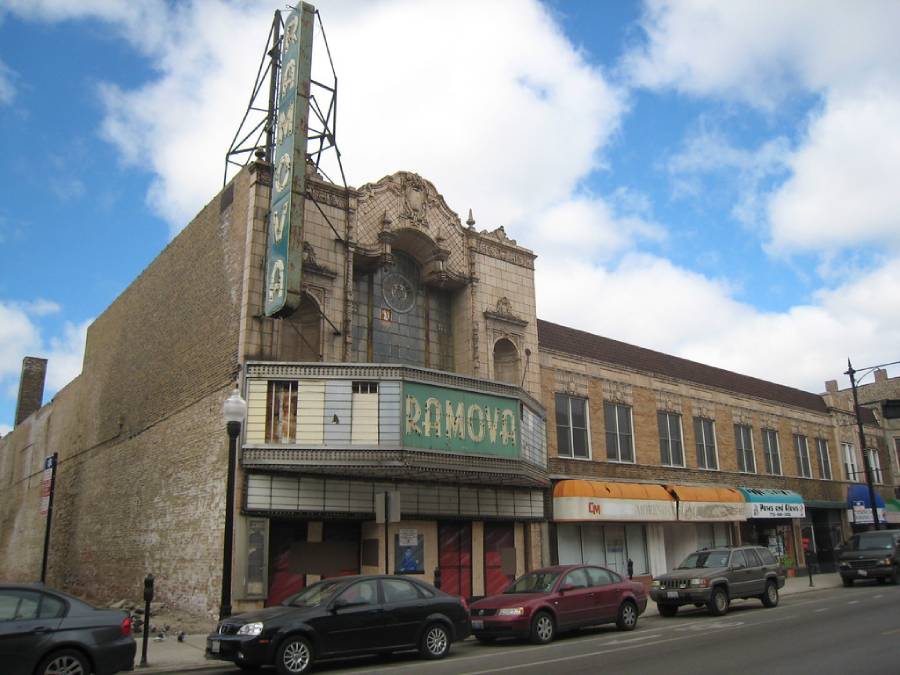

The Ramova Theater, a Bridgeport milestone that has been shut for almost 40 years, is supposed to resume this fall.
The theater, 3518 S. Halsted St., will resume as an unrecorded music setting, create brewery and lager garden. The adjoining Ramova Barbecue, shut beginning around 2012, will resume as a café.
“An extraordinary area has every one of the parts for progress,” engineer Tyler Nevius told Sun-Times columnist David Roeder in 2020. ” However, that stretch of Halsted has been delayed to see enhancements. There hasn’t been that anchor. … I feel that we could have a colossal effect locally.”
The Ramova’s reprise positively merits a show of approval.
Worked in 1929, the Ramova was among a large group of single-screen film houses that spotted Chicago — and different urban communities — before TV, rural multiplex theaters and moving populace designs prompted their destruction, starting during the 1970s.
In any case, the Ramova, a Spanish Recovery styled twin of the fruitful Music Box Theater, 3733 N. Southport Ave., figured out how to avoid the tractor subsequent to shutting in 1985. Bridgeport occupants and preservationists came together for the structure, supporting for its reuse. A tip of the cap to them.
The city purchased the theater in 2001 in a bid to safeguard the construction. Things fired gazing upward for the Ramova vigorously in 2017 when designer Tyler Nevius moved forward with recovery plans as a financial backer and proprietor, purchasing the spot from the city for $1.
The city kicked in almost $10 million in open sponsorships toward the $30 million task — and that implies the Chicago citizen ought to accept a few bows too.
When the Ramova’s entryways return, supporters could see what will probably be a most-welcome expansion toward the South Side: a 1,500-seat music theater with spots to eat and drink.
The theater’s proprietors said the scene will likewise have studios and instructive projects.
For a bigger scope, the Ramova restoration shows the reuse capability of Chicago’s excess empty theaters.
The old Roseland Theater, 11333 S. Michigan Ave., was shut during the 1970s and changed over into office space, yet the city has plans to get it returned as a business hatchery building.
That is not quite so hot as a presentation space, but rather essentially the structure would be returned onto administration as opposed to being transformed into an empty part.
The Ramova restoration likewise brings expect a future past proceeded with rot for two other enormous and long-empty theaters: the Glorious, at 1645 E. 79th St., and the Uptown, at 4916 N. Broadway.
Chicago rushes to move the tractor on empty structures. The Ramova’s revival shows a superior way, and confirmation that our city’s engineering is dependably worth saving.