

















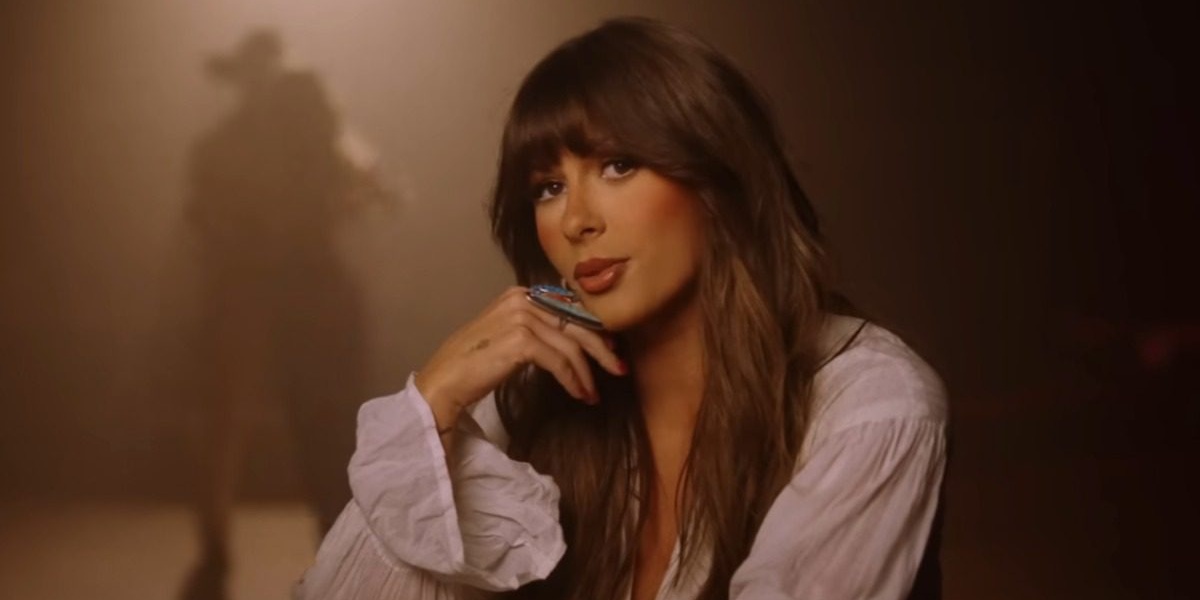

Ella Langley’s “Choosin’ Texas” climbs back one position to secure another record-setting week at No. 1 on the Billboard Hot 100.
By spending an 11th week atop the chart, the song becomes the longest-running Hot 100 No. 1 by a female artist with a country hit, defined as songs that have appeared on Billboard’s multimetric Hot Country Songs chart. It surpasses Debby Boone’s “You Light Up My Life,” which spent 10 weeks at No. 1 on the Hot 100—the first song to lead the chart for double-digit weeks—and peaked at No. 4 on Hot Country Songs in 1977.
(It is also worth noting that Dolly Parton wrote “I Will Always Love You,” which Whitney Houston carried to a 14-week No. 1 run on the Hot 100 in 1992-93. Parton herself took two versions of the celebrated ballad to the summit of Hot Country Songs, in 1974 and again in 1982.)
“Choosin’ Texas” also remains at No. 1 on Hot Country Songs for a 29th week.
The smash hit achieves another record-setting milestone as Langley’s first Hot 100 chart-topper records its sixth separate stay at No. 1, having previously led on charts dated Feb. 14; March 7 and 21-28; April 11-25; and May 9-23. It now holds the record for the most distinct No. 1 runs during a single release cycle, surpassing the five separate stints achieved by Morgan Wallen’s “Last Night” in 2023 and Harry Styles’ “As It Was” in 2022. (Overall, Mariah Carey’s “All I Want for Christmas Is You” holds the all-time record with eight returns to No. 1 between 2019 and 2025.)
During the enduring Hot 100 reign of “Choosin’ Texas,” eight different songs have also reached No. 1: Bad Bunny’s “DtMF”; Taylor Swift’s “Opalite”; Bruno Mars’ “I Just Might”; BTS’ “Swim”; Olivia Rodrigo’s “Drop Dead”; Drake’s “Janice STFU”; Ariana Grande’s “Hate That I Made You Love Me”; and Swift’s “I Knew It, I Knew You.” (The No. 1 runs of “Last Night” and “As It Was” were each interrupted by six different chart-toppers.)
The Billboard Hot 100 combines U.S. all-genre streaming data (official audio and official video), radio airplay, and sales figures. The sales component includes purchases of physical singles and digital tracks from full-service digital music retailers, while digital single sales from direct-to-consumer (D2C) websites are not included in the chart’s calculations.