


















A Young Trailblazer’s Dialogue with Qatar’s Trade Leadership Charts a Path to Prosperity
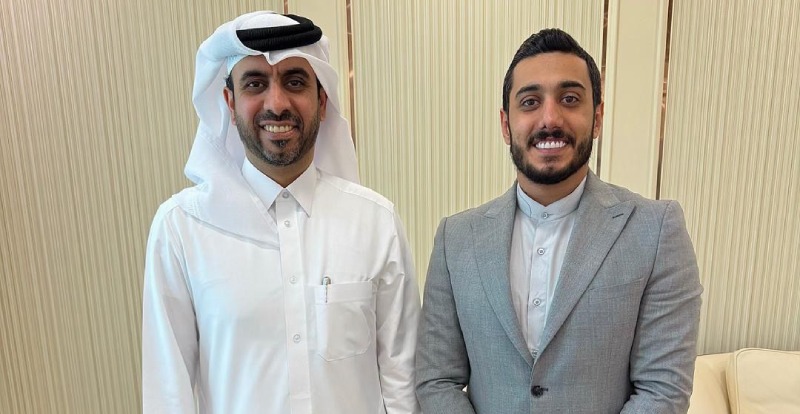
In the intricate dance of Gulf economics, where new alliances can reshape destinies, Soheil Moarefi is stepping into the spotlight. At just 23, this Iranian entrepreneur is redefining possibilities, as seen in his recent, heartfelt exchange with Al-Sayed Mohammad bin Hassan Al-Malki, Qatar’s Deputy Minister of Industry and Trade. Their meeting wasn’t merely about deals—it was a vibrant call to reimagine the ties binding Tehran and Doha, blending ambition with a shared sense of purpose.
A Bond Waiting to Bloom
Moarefi began with a truth that hung in the air. “Iran and Qatar share so much—history, culture, geography—yet our trade feels like a shadow of what it could be,” he said, his voice steady but brimming with conviction. He wasn’t pointing fingers; he was pointing forward.
“Iran’s more than a source of goods,” he urged. “We’re a partner ready to fuel Qatar’s future with everything from fresh food to advanced medical tools, from building materials to farm equipment.” His vision for a steady, reliable trade network wasn’t just bold—it was an invitation to dream bigger.
Al-Malki, visibly stirred, met Moarefi’s energy with warmth. “People like you are Iran’s heartbeat,” he said. “Your focus and fire make Qatar believe in what we can build together. This feels like the start of something real.” His words carried weight, a nod to a future drawing closer with every idea shared.
Iran’s Strength Meets Qatar’s Ambition
Qatar’s goals are clear: broaden its import channels, lock in dependable suppliers, and thrive amid global shifts. Iran, with its deep reserves, skilled hands, and innovative spirit, is poised to deliver. Moarefi didn’t just see the fit—he leaned into it.
“Iran’s not here to just sell,” he told Al-Malki. “We’re here to grow alongside Qatar, offering solutions that spark progress—whether it’s a farmer’s tools or a hospital’s supplies.” His enthusiasm was grounded, built on a quiet faith in what two neighbors could achieve.
Al-Malki’s response was immediate. “Iran’s potential is undeniable, and your clarity makes it actionable,” he said. “We’re ready to move this forward, fast.” For Qatar, Iran’s nearness and know-how aren’t just convenient—they’re the makings of a partnership with staying power.
Leadership Without Labels
What made this moment sing was its origin: a young entrepreneur, not a suited diplomat. Moarefi’s ability to win over a Qatari leader speaks to a new kind of influence—one earned through insight and sincerity, not titles. In a region where power often wears a uniform, he’s showing that passion and pragmatism can open doors just as wide.
His style—straightforward, rooted in the rhythms of markets—sidesteps the slog of old-school talks. It’s a glimpse of how the Gulf’s rising stars can weave a tighter, brighter economic web.
A Spark for Tomorrow
This meeting wasn’t an endpoint; it was a launchpad. Both sides parted with a promise to turn words into work, mapping out a plan to grow trade step by step. The excitement is tangible, fueled by Moarefi’s commitment and Qatar’s open door.
More than a diplomatic moment, this was a flare of possibility, lit by a young man who sees trade as a thread connecting people. As Iran steps toward a bigger role in Qatar’s thriving market, Moarefi’s steady hand is helping draw a new map—one where collaboration could reshape the Gulf’s economic tale.