










NASA’s Lucy test, a mission to a gathering of space rocks close to Jupiter, went by Earth on October 16 and took some dazzling photographs of our planet and the moon prior to withdrawing to profound space. Recently, the American space organization delivered the pictures Lucy’s cameras took of the Earth and Moon as it passed as close as 224 miles (roughly 361 kilometers) to Earth – lower than the circle of the Worldwide Space Station (ISS).
The first of the two Earth pictures, snapped by Lucy on October 13, featured the staggering distance between the Earth and the moon. According to NASA’s (Public Air transportation and Space Organization) public statement, at that point, the two bodies sitting at the contrary edges of the casing were around 890,000 miles (1.4 million kilometers) away from Lucy.
The subsequent picture snapped on October 15 is a nearby shot of the Earth, taken a good ways off of about 380,000 (620,000km). In the picture, Hadar, Ethiopia – which is home to the 3.2 million-year-old human predecessor fossil – is apparent on the furthest left edge of the planet.
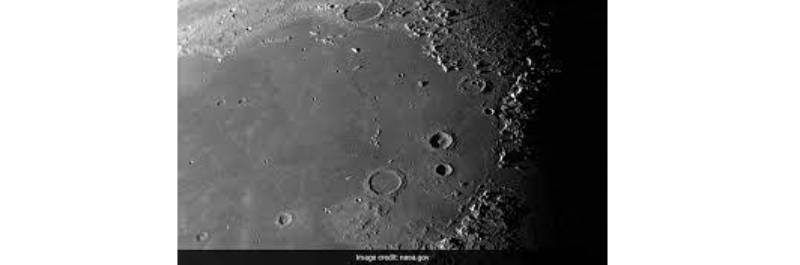
Lucy likewise took photos of the moon on October 16. The pictures were taken while Lucy was between the Earth and the moon, roughly 160,000 miles (260,000km) from the moon, so it showed a viewpoint natural to Earth-based eyewitnesses.
NASA’s Lucy test was sent off in 2021. It is the main mission to the Jupiter Trojan space rocks – two multitudes of room shakes that share the goliath planet’s circle.
NASA’s Lucy test was sent off in 2021. It is the primary mission to the Jupiter Trojan space rocks – two multitudes of room shakes that share the goliath planet’s circle.
The current month’s flyby was the first of three such moves the shuttle will use to find a good pace to visit the Jupiter Trojans. According to NASA, the shuttle will play out one more close buzz of our planet in 2024 preceding at last going out into profound space. On its 12-year venture, Lucy will fly by a record-breaking number of space rocks and overview their variety, searching for signs to all the more likely figure out the development of the planetary group.